
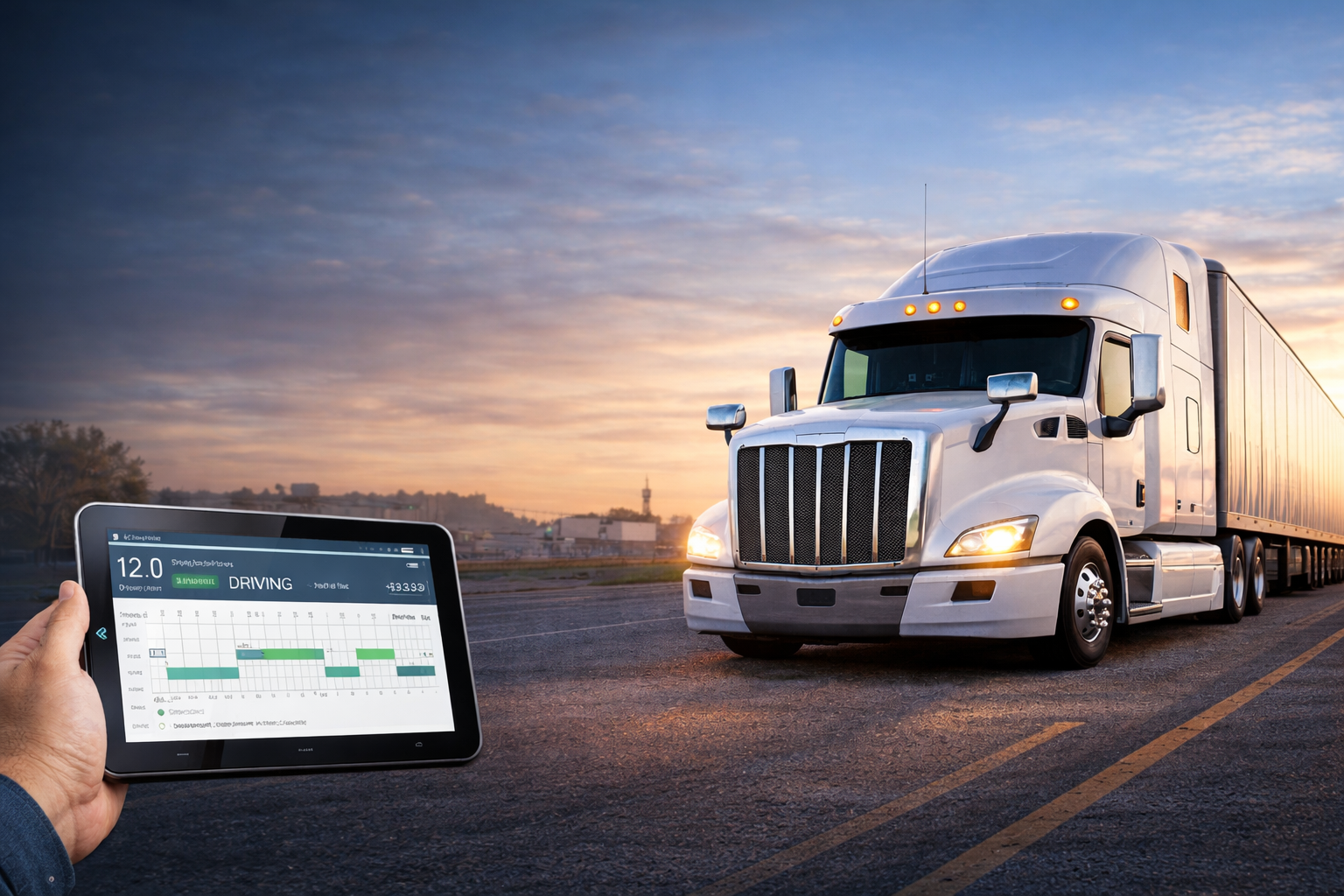
Electronic Logging Device compliance is not new—the FMCSA’s ELD mandate has been in effect since December 2017. Yet violations remain one of the top reasons commercial drivers receive out-of-service orders at roadside inspections. Understanding what’s required, what’s changed, and how to protect your fleet is as important today as it was when the mandate first took effect.
The stakes are straightforward. A single ELD violation can result in a fine of up to $16,000 per offense. Beyond the fine itself, violations add points to your Carrier Safety Administration (CSA) score, which affects your insurance premiums, your relationships with shippers and brokers, and your ability to compete for freight. A pattern of violations can result in an unsatisfactory safety rating—and that can end a business.
The FMCSA uses the Safety Measurement System (SMS) to score carriers across seven Behavior Analysis and Safety Improvement Categories (BASICs), including Hours of Service Compliance. Violations stay on your record for 24 months. One bad inspection week can haunt your CSA score for two years.
Most commercial motor vehicle drivers who are required to keep Records of Duty Status (RODS) must use a registered ELD. This includes drivers of vehicles with a gross vehicle weight rating over 10,001 pounds, drivers who operate in interstate commerce, and drivers who cross state lines regardless of trip distance.
Exemptions still apply for certain short-haul operators, drivers who use paper logs for 8 days or fewer within a 30-day period, drivers of older vehicles (model year 1999 and earlier), and drivers engaged in driveaway-towaway operations. If you’re unsure whether an exemption applies to your operation, contact your fleet’s compliance counsel or check the FMCSA website.
To be FMCSA-registered, an ELD must automatically record engine hours, vehicle movement, miles driven, and location information. It must synchronize with the vehicle’s engine to record on-duty driving time, support data transfer to enforcement officials via Bluetooth, USB, or telematics, and allow drivers to review and certify their logs.
Using a device that is not on the FMCSA’s registered device list is itself a violation, even if the device captures the required data. Always verify your ELD’s registration status at the FMCSA website before putting it in service.
With hundreds of registered devices on the market, choosing the right ELD comes down to ease of use, reliability, customer support, cost, and integration with your existing fleet management tools. Drivers are more likely to use a system correctly and consistently if it doesn’t slow them down. Look for a solution that offers a clean mobile app, automatic log synchronization, clear violation alerts, and simple DVIR and IFTA reporting.
The most affordable ELD isn’t always the most cost-effective one. Factor in training time, support responsiveness, and the risk of compliance gaps from a poorly designed system.
